


Tầng 12, TN CDC, 25 Lê Đại Hành, P. Hai Bà Trưng


Du học Đức Anh
Welcome to Duc Anh EduConnect - A Leading International Education Consultancy Group!


Information about University of Southern Queensland (UniSQ), Australia
1. Website: usq.edu.au
2. Campuses & Locations (4 campuses)
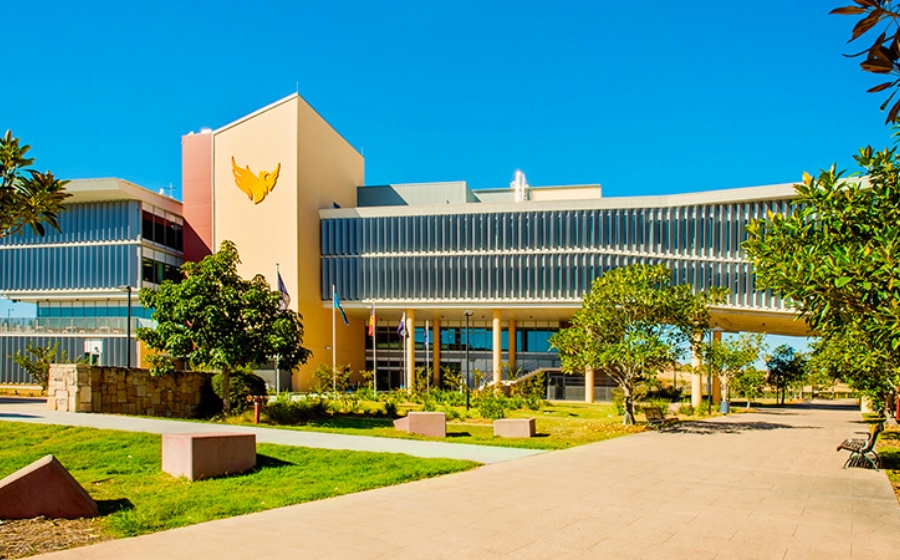
- Main Campus – USQ Toowoomba: the second most populous inland city in Australia, approximately 2 hours by car from Brisbane International Airport;
- Springfield Campus: approximately 30 minutes’ drive from Brisbane and 90 minutes from Toowoomba;
- Ipswich Campus: approximately 30 minutes’ drive from Brisbane;
- Hub@Stanthorpe Campus: located within the Queensland College of Wine Tourism.
3. Type of Institution: Public university
4. Rankings – Quality Assurance:
- Ranked 411st globally (QS World University Rankings 2027);
- Ranked 24th in Australia (THE World University Rankings 2025);
- UniSQ rankings: https://www.unisq.edu.au/news/2025/06/qs-world-rankings
5. Total Student Population: > 27,500 students
6. International Students: > 7,500 students
7. Strengths:
- Ranked #55 among the world’s best young universities (THE Young University Rankings 2023);
- #1 in Australia for graduate starting salaries (Good Universities Guide 2022);
- Awarded 5-star ratings by QS for internationalisation and graduate employability;
- Strong disciplines including Materials Science, Automation, ICT, Science, Economics, Education, and more;
- Low cost of living and convenient access to major cities in Queensland; benefits of regional study include 4-6 years of post-study work rights and an additional 5 points toward permanent residency;
- The only university in Australia and one of just 17 universities worldwide to hold all three prestigious business school accreditations: AMBA (UK), AACSB (USA), and EQUIS (Europe); its MBA programme is ranked 3rd in Australia;
- Strong global partnerships with leading organisations such as Microsoft, UNESCO, Shell, WHO, Boeing, and Oracle;
- Home to 150 student clubs and associations, including the Pharmacy Students’ Association, Law and Social Study Groups, Construction Student Association, cultural groups such as the Malaysian Student Association, Indian Student Association, Amnesty International, and 33 sports clubs (equestrian, football, swimming, rock climbing, and more), alongside a wide range of extracurricular activities;
- Significant investment in leading research centres in Australia, including the National Centre for Engineering in Agriculture (NCEA), Australian Centre for Sustainable Catchments (ACSC), Centre of Excellence in Engineered Fibre Composites (CEEFC), and the Australian Digital Futures Institute (ADFI), providing optimal conditions for study and research.
8. Training-related Information
a. Training programs: View details here
- Foundation Studies;
- Bachelor’s degrees: 3-4 years;
- Postgraduate programmes: Master’s (1.5-2 years) or Doctoral (PhD – 3 years);
- Short courses: 6 months – 1 year;
- English Language Programmes.
b. Faculties:
UniSQ has 2 faculties:
- Faculty of Business, Education, Law and Arts
- Arts and Humanities
- Aviation
- Business and Management
- Education and Teaching
- Media and Communication
- Visual and Performing Arts
- Law and Criminology
- Faculty of Health, Engineering and Sciences:
- Agriculture and Environment
- Engineering
- Information and Communications Technology
- Nursing and Allied Health
- Psychology and Human Services
- Sciences
- Surveying and Built Environment
c. Training courses: View details here
Agriculture & Environment
- Agricultural Engineering
- Agricultural Science
- Environment and Sustainability
- Environmental Engineering
Business & Management
- Undergraduate study options
- Accounting
- Business Administration
- Business Economics
- Finance
- Human Resource Management
- International Business
- Management and Leadership
- Marketing
- Property Development
Information & Communication Technology
- Big Data and Visualisation
- Computer Systems Engineering
- Cyber Security
- Data Science
- Design and Interactive Technologies
- Information Technology
Nursing & Allied Health
- Nursing
- Paramedicine
- Health Leadership
- Public Health
- Rural and Remote Health
- Sport and Exercise
Arts & Humanities
- Anthropology
- Archaeology
- International Relations
- Legal Studies
- Social Justice
- English Literature
- History
- International Relations
Education & Teaching
- Primary Education
- Secondary Education
- Career Development
- Counselling in Education
- Special Education
- STEM Education
- Tertiary Teaching
- TESOL
Law & Criminology
- Criminology and Criminal Justice
- Law
Psychology & Human Services
- Psychology
- Child, Youth and Family Therapy
- Counselling
- Mental Health Counselling
Aviation
- Aviation Management
- Flight Operations
Engineering
- Agricultural Engineering
- Civil Engineering
- Computer Systems Engineering
- Electrical and Electronic Engineering
- Environmental Engineering
- Infrastructure Management Engineering
- Instrumentation Control and Automation Engineering
- Mechanical and Mechatronic Engineering
- Mining Engineering
- Power Engineering
Media & Communication
- Advertising
- Journalism
- Marketing
- Public Relations
- Media Studies
- Professional Communication
Sciences
- Agricultural Science
- Astronomy
- Biology
- Biomedical Sciences
- Chemistry
- Mathematics and Statistics
- Medical Laboratory Science
- Physics and Physical Sciences
- Wine Science
New programmes
- Arts and Humanities
- Bachelor of Arts – 2 new majors in Criminology
- Business and Management
- Master of Business Administration (MBA)
- Graduate Diploma of Business Administration
- Graduate Certificate of Business Administration
- Education and Teaching
- Master of Learning and Teaching (Early Years)
- Master of Learning and Teaching (Primary)
- Master of Learning and Teaching (Secondary)
- Media and Communication
- Bachelor of Design and Interactive Technologies
- Bachelor of Film and Screen Production
- Bachelor of Television and Radio Production
- Nursing and Allied Health
- Master of Public Health
- Visual and Performing Arts
- Bachelor of Creative Arts and Community Wellbeing
- Bachelor of Music
- Bachelor of Theatre
- Bachelor of Visual Art
9. Study pathways for students
- After Grade 12 → Bachelor’s degree or Foundation programme;
- After completing a Bachelor’s degree → Master’s or PhD programmes.
10. Entry requirements: View details here
- Foundation Programme: Completion of High School; IELTS 5.5 (no band below 5.0)
- Bachelor’s degree: Completion of High School; IELTS 6.0 (no band below 5.5). Some programmes may have additional requirements – please contact us for details.
- Postgraduate programmes: Completion of a Bachelor’s degree; IELTS 6.5 or above
11. Intakes: February, July, November
12. Application Documents
General documents:
- Certificate/Diploma of the highest level of education completed;
- Academic transcripts for the most recent two years;
- English language certificate (if available);
- Passport (photo and signature page), if available;
- Academic achievements and extracurricular activities (if applying for scholarships).
For Master’s programmes – additional requirements:
- Curriculum Vitae (CV);
- Letter of recommendation.
For PhD / Master of Research’s programmes – additional requirements:
- Research proposal;
- Published academic papers (if any).
13. Tuition Fees: View details here.
- Bachelor’s programmes: AUD 26,000 – 35,280 per year;
- Postgraduate programmes: AUD 26,880 – 37,600 per year.
The above tuition fees are for reference only. Please contact us for the most up-to-date information.
14. Living Expenses: Estimated at AUD 470 – 1,358 per week. For details, please view here.
15. Scholarships: View details here
- Chancellor’s Excellence Scholarship 2024: AUD 18,000 (24 units) or AUD 24,000 (32 units) for students with ATAR 97+ commencing Bachelor’s programmes at UniSQ before 30/09/2024.
- Vice-Chancellor’s Excellence Scholarship: AUD 15,000 (24 units) or AUD 20,000 (32 units) for students with ATAR 88+ commencing Bachelor’s programmes at UniSQ before 30/09/2024.
16. Accommodation and Other Services: Students may choose homestay or on-campus accommodation. View details here.
UniSQ offers three on-campus residential colleges at USQ Toowoomba, with fees ranging from AUD 165 – 418 per week, plus a Resident Student Club (RSC) fee of AUD 85 per semester:
- Concannon College
- McGregor College
- Steele Rudd College
17. Support from Duc Anh EduConnect
1. Website: https://www.uq.edu.au/
2. Campuses & Locations (3 Campuses)
- St Lucia: approximately 10 minutes from Brisbane CBD and 20 minutes from Brisbane Airport by car;
- Gatton – Rural Campus: approximately 1 hour from Brisbane CBD and 1 hour 10 minutes from Brisbane Airport by car;
- Herston – A hub for health research: approximately 10 minutes from Brisbane CBD and 15 minutes from Brisbane Airport by car.
3. Type of Institution: Public university
4. Rankings – Quality Assurance:
- Ranked 40th globally (QS World University Rankings 2027);
- Ranked 5th in Australia (THE World University Rankings 2025);
- UQ University Profile: https://about-us.uq.edu.au/university-profile
5. Total Student Population: > 53,696 students
6. International Students: > 18,074 students from 134 countries
7. Strengths:
The University of Queensland – A true academic paradise for students.
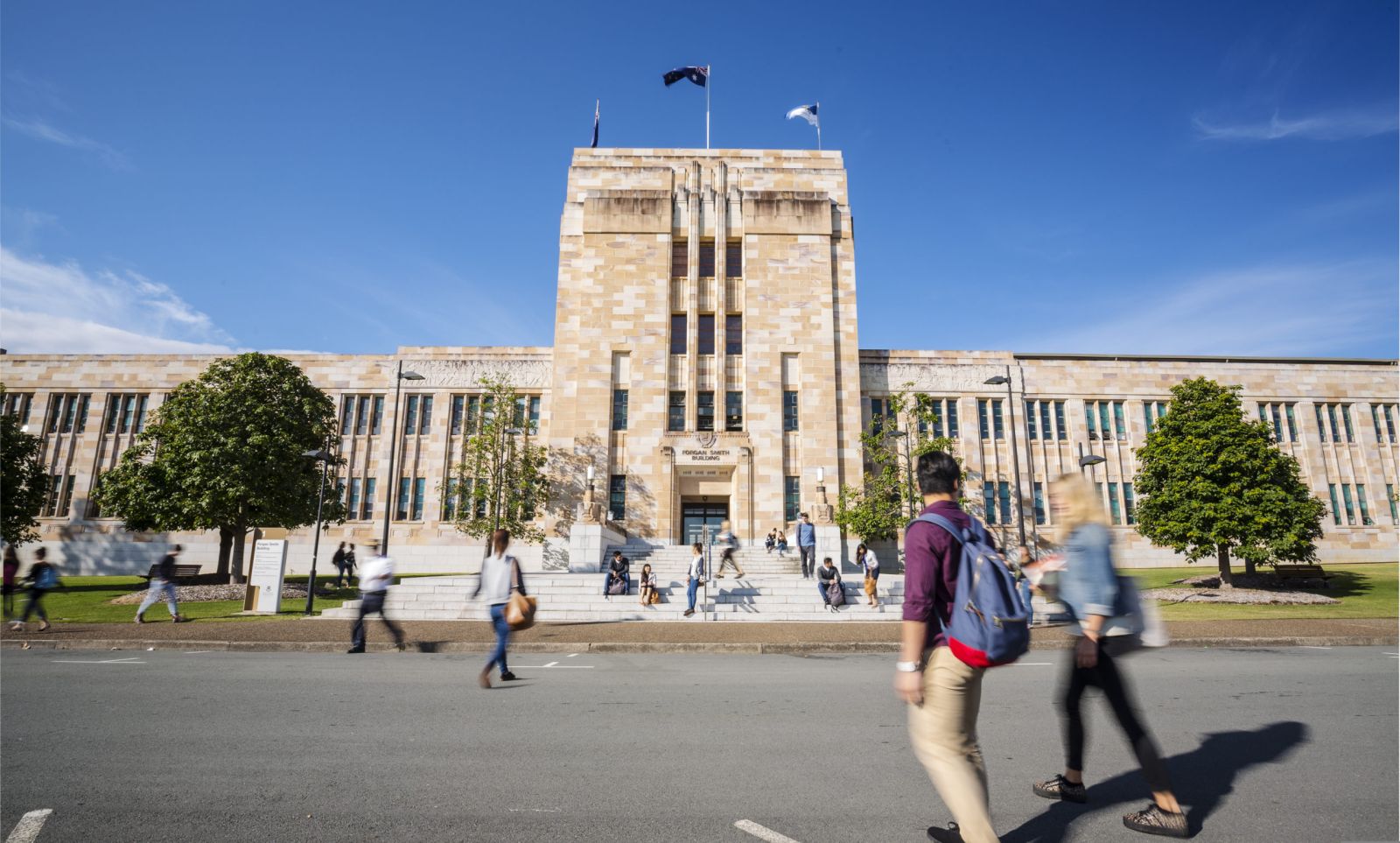
UQ is often described as a “paradise” thanks to its largest and most beautiful campuses among Australian universities, featuring open spaces, refined architecture, and thoughtfully designed learning environments, combined with outstanding teaching quality – especially suitable for students who wish to balance practical learning with research passion.
- Consistently ranked among the top universities worldwide; in 2025: #40 globally, #6 in Australia;
- One of three Australian universities belonging to Universitas 21, and a founding member of the Group of Eight (Go8);
- Outstanding subject rankings: 2 disciplines in the Top 5 worldwide; #23 globally in Pharmacy & Pharmacology, #27 in Hospitality & Tourism Management, #28 in Psychology, #32 in Biological Sciences, #40 in Education, with 13 disciplines ranked in the global Top 50;
- Approximately 87% of professors hold PhD degrees and are fellows of five prestigious academies: AAS, AAHMS, ASSA, ATSE, and AAH;
- Recognised as one of the most comprehensive, research-intensive universities: UQ hosts 8 internationally accredited research institutes and interdisciplinary research projects involving over 1,500 scientists, engineers, and experts worldwide, alongside 130 advanced collaborative research centres in more than 50 countries (1);
- Extensive and modern library system: over 832,000 printed books, 1.25 million e-books, 140,000 academic journals, and 31,000 physical research materials, providing vast resources for academic research;
- Offers over 400 programmes across undergraduate and postgraduate levels. You may explore programmes here.
(1) According to the Australian Federal Government’s 2018 Excellence in Research for Australia
Beyond academics, UQ is strongly committed to holistic student development, actively encouraging participation in meaningful extracurricular activities, professional networking, and career readiness support.
Strong Competitive Advantages for Employment and Migration
Graduates of UQ enjoy significant advantages in both employment and long-term settlement:
- Top-ranked in Queensland for graduate employment rates;
- 81% of Bachelor’s graduates secure full-time employment, with an average salary of approximately AUD 67,000, exceeding the national average;
- Students may work up to 48 hours per fortnight during study periods and full-time during official breaks and holidays;
- Post-study work opportunities of 2-3 years;
- Permanent residency opportunities, subject to eligibility.
8. Training-related Information
a. Training programs: View details here
- English Language Programmes;
- Foundation Studies – 1 year;
- Diploma – 8 months or 1 year;
- Bachelor’s degrees – 3-4 years;
- Master’s degrees – 1-2 years;
- Doctoral (PhD) programmes – 3-5 years.
b. Faculties: View details here
UQ has 6 faculties:
- Business, Economics and Law;
- Engineering, Architecture and Information Technology;
- Health and Behavioural Sciences;
- Humanities and Social Sciences;
- Medicine;
- Science.
c. Training courses: View details here
- Agriculture and Environment: Agribusiness and Agricultural Sciences, Animals, Earth and Environmental Sciences, Environmental Management, Food Sciences, Geography, Plants;
- Architecture and Planning: Architectural Design, Rural and Community Development, Urban and Regional Planning;
- Arts, Humanities and Social Sciences: History, Philosophy and Cultures, Humanities, Literature and the Arts, Languages, Media, Communication and Journalism, Music, Politics, Social Sciences and International Studies;
- Business and Economics: Accounting and Finance, Business and Management, Economics, Executive Development, Government and Public Policy, Marketing and Advertising, Tourism, Hospitality and Events;
- Education: Health and Physical Education, Primary, Professional Development, Secondary, TESOL;
- Engineering and Computing: Chemical Engineering, Civil Engineering, Computing, Electrical Engineering, Mechanical Engineering, Mechatronic Engineering, Software Engineering;
- Health and Behavioural Sciences: Audiology and Speech Pathology, Biostatistics, Epidemiology and Public Health, Dentistry, Exercise, Sport and Nutrition, Nursing and Midwifery, Occupational Therapy and Physiotherapy, Pharmacy, Psychology, Social Work and Counselling, Workplace Health and Safety;
- Law: Business and Commercial Law, Criminology and Justice, Law;
- Medicine: Biomedical Science, Epidemiology and Public Health, Medicine, Pathways to Medicine;
- Science and Mathematics: Animal and Veterinary Sciences, Biology, Biomedical Science, Biotechnology, Chemistry and Nanotechnology, Earth and Environmental Sciences, Mathematics and Physics.
9. Study pathways for students
- After Grade 11: Foundation Studies + Bachelor’s degree (from Year 1);
- After Grade 12, students may choose:
- Foundation Studies + Bachelor’s degree (from Year 1);
- Direct entry to Year 1 of a Bachelor’s degree;
- After completing a Bachelor’s degree: progression to a Master’s programme;
- After completing a Master’s degree: progression to a PhD programme.
10. Entry requirements: View details here
- Foundation Studies: Completion of Grade 11, ATAR ≥ 60 or equivalent, IELTS ≥ 5.5 (no skill below 5.0);
- Bachelor’s degree: Completion of Grade 12, ATAR ≥ 60 or equivalent or completion of Foundation Studies;
- Master’s degree: Completion of a Bachelor’s degree, GPA ≥ 6.0, IELTS ≥ 6.0;
- Doctoral (PhD) degree: Completion of a Master’s degree, GPA ≥ 5.5/7.0, IELTS ≥ 6.5, minimum 2 years of work experience, and research publications.
11. Intakes
- Foundation Studies: January, February, May, June, August, October;
- Bachelor’s / Master’s programmes: February, July.
12. Application Documents
General documents:
- Certificate/Diploma of the highest level of education completed;
- Academic transcripts for the most recent two years;
- English language certificate (if available);
- Passport (photo and signature page), if available;
- Academic achievements and extracurricular activities (if applying for scholarships).
For Master’s programmes – additional requirements:
- Curriculum Vitae (CV);
- Two (02) letters of recommendation.
For PhD / Master of Research’s programmes – additional requirements:
- Research proposal;
- Published academic papers.
13. Tuition Fees: View details here.
- Foundation Studies: AUD 35,560 – 43,990 per year;
- Bachelor’s degrees: AUD 43,200 – 53,760 per year;
- Master’s degrees: AUD 43,200 – 69,980 per year;
- Doctoral (PhD) programmes: AUD 44,148 – 55,232 per year.
14. Living Expenses: Estimated at AUD 18,000 – 22,000 per year.
15. Scholarships: View details here
- UQ International Excellence Scholarship: 25% tuition fee for the full programme (up to 4 years) for Bachelor’s and coursework Master’s programmes;
- UQ International High Achiever Award – Global: 20% tuition fee for the full programme (up to 4 years) for Bachelor’s and postgraduate programmes;
- MBA Student Scholarship – International: 25% tuition fee for the MBA programme;
- International Onshore Merit Scholarship: AUD 5,000 – 10,000, applicable to Bachelor’s and coursework Master’s programmes, exclusively for students who have completed their most recent qualification in Australia;
- UQ Lifelong Learner: 10% tuition fee for the full programme (Bachelor’s and coursework Master’s), for UQ alumni.
16. Accommodation: Students may choose homestay, on-campus accommodation, shared housing (for students aged 18 and above), or living with relatives. Accommodation details here.
17. Support from Duc Anh EduConnect - Official UniSQ Representative
Duc Anh EduConnect offers FREE and comprehensive support throughout the entire study abroad journey. Our experienced team assists students with course and university selection, admission and scholarship applications, student visa assistance, accommodation arrangements, airport pick-up, and ongoing support while studying overseas.
Please CONTACT US for FREE consultation and application.

Other news
សាកលវិទ្យាល័យកំពូលៗនៅអូស្ត្រាលី សម្រាប់និស្សិតឆ្នើម

សាកលវិទ្យាល័យកំពូលៗនៅអូស្ត្រាលី សម្រាប់និស្សិតឆ្នើម
អូស្ត្រាលីមានប្រព័ន្ធអប់រំឈានមុខគេមួយក្នុងពិភពលោក ដោយផ្តល់នូវបរិយាកá

ការងារ ការស្នាក់នៅអចិន្ត្រៃយ៍ (PR) និងអាហារូបករណ៍ ជាមួយ La Trobe University ប្រទេសអូស្ត្រាលី
តើគោលដៅចុងក្រោយនៃការសិក្សានៅបរទេសរបស់អ្នក គឺចង់ទទួលបាន ការងារល្អ ឱកាáž
List of Private Vocational Training Colleges

List of Private Vocational Training Colleges
Including: 1. Private Institutes 2. Private Colleges by State and Territory: Australian Capital Territory (Canberra) New South Wales Victoria South Australia Western Australia Tasmania Quee
Private Colleges in Northern Territory - Australia

Private Colleges in Northern Territory - Australia
AAMC Training GroupUnit 5, 17 Foley Street, Balcatta, WA 6021 (Addresses in all states)PHONE: 08 9344 4088FAX: 08 9344 4188EMAIL: info@aamctraining.edu.auWEBSITE: http://www.aamctrainin
Private Colleges in Queensland - Australia

Private Colleges in Queensland - Australia
AAMC Training GroupUnit 5, 17 Foley Street, Balcatta, WA 6021 (Addresses in all states)PHONE: 08 9344 4088FAX: 08 9344 4188EMAIL: info@aamctraining.edu.auWEBSITE: http://www.aamctrainin
Private Colleges in Tasmania

Private Colleges in Tasmania
AAMC Training GroupUnit 5, 17 Foley Street, Balcatta, WA 6021 (Addresses in all states)PHONE: 08 9344 4088FAX: 08 9344 4188EMAIL: info@aamctraining.edu.auWEBSITE: http://www.aamctrainin
Private Colleges in Western Australia

Private Colleges in Western Australia
AAMC Training GroupUnit 5, 17 Foley Street, Balcatta, WA 6021(Addresses in all states)PHONE: 08 9344 4088FAX: 08 9344 4188EMAIL: info@aamctraining.edu.auWEBSITE: http://www.aamctraining.edu.
Private Colleges in South Australia - Australia

Private Colleges in South Australia - Australia
AAMC Training GroupUnit 5, 17 Foley Street, Balcatta, WA 6021 (Addresses in all states)PHONE: 08 9344 4088FAX: 08 9344 4188EMAIL: info@aamctraining.edu.auWEBSITE: http://www.aamctrainin


 CONTACT US FOR CONSULTATION

